Work Deakin University
A working relationship,
hundreds of sprints long.
From a custom Squiz Matrix authoring interface to a component-led Squiz DXP rebuild. Over more than a decade, Ladoo has worked alongside Deakin’s web team through both, and kept building between them.
See how authors build a page Higher education
Squiz Matrix & Squiz DXP
The platform changed.
The partnership continued.
Two major projects, with ongoing development connecting them. The work carries forward from one generation of the site to the next.
- The Matrix rebuildA custom authoring interface, modular layouts and integrated course data.
- Keep buildingNew components, technical support and improvements with the marketing team.
- A new component frameworkReusable authoring components rebuilt using Squiz DXP’s new component framework.
- Still part of the teamMaintain, extend, review. The website keeps evolving.
A page builder,
before native components.
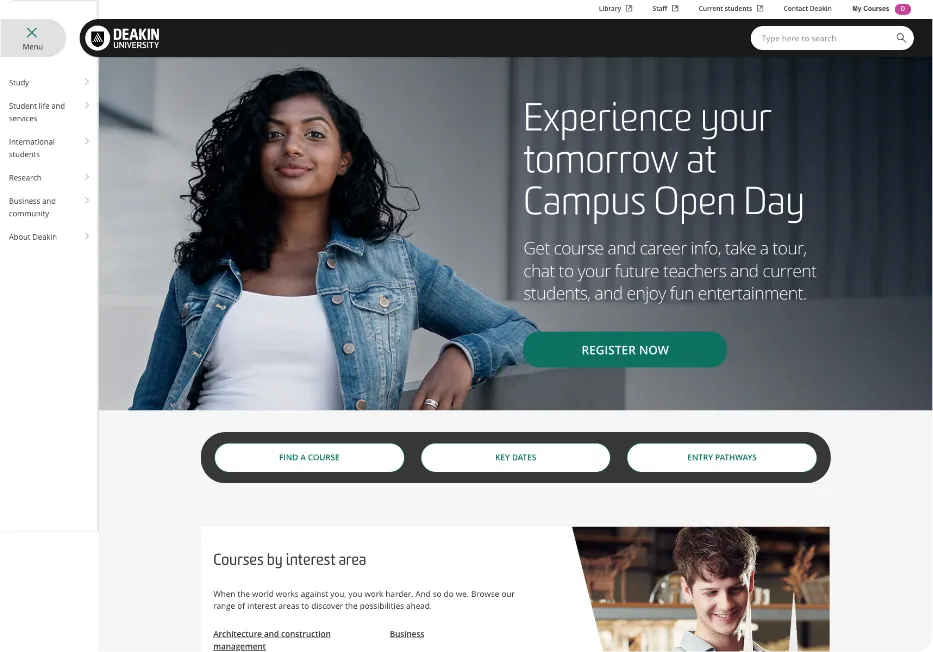
The original engagement included more than a year working alongside Deakin’s marketing team, with daily stand-ups, fortnightly planning and stakeholder demonstrations. On the Squiz Matrix rebuild, Ladoo created a contextual, inline editing experience: authors worked with content in the page layout, using Deakin’s design system.
The editing view closely matched the finished page, reducing the need to switch back and forth to preview. Templates gave recurring content a consistent structure, and versioned components could be upgraded while preserving existing content.
ResearchIdeas that
make a difference.
Discover research at Deakin.
Research at Deakin
A place to introduce the work, explain its purpose and connect readers with what comes next.
Explore our research
Meet the people behind the workInteractive illustration of the authoring approach. This is not a recording of Deakin’s original editor.
Two sources.
One useful course page.
Course pages brought together marketing content written in Squiz and course-specific data from an API.
Ladoo removed the incoming formatting and presented that data through Deakin’s approved components, keeping the underlying information intact.
See where the content comes from
Authored content and course data share one page and one design system.
The story around the course
Introductions, supporting content and the reasons a prospective student might choose it.
The information behind it
Course-specific information brought into the page without changing its underlying data.
Presented in Deakin’s styleIncoming formatting removed. Approved components applied.
A course,
with a story.
An introduction written for the people deciding what to study next.
- Course information
- Supplied by the API
- Presentation
- Deakin’s approved components
- Underlying data
- Preserved
Help students take the next step
Supporting content gives the facts their context.
A new platform.
The knowledge comes with it.
When Deakin moved to Squiz’s cloud platform, Ladoo was selected again as part of the project team. We rebuilt the authoring components for Squiz DXP and helped test the new component framework.
The development environment, codebase and deployment process were modernised alongside the components.
Build once.
Use across the site.
A shared library gives authors consistent patterns to build with. The content changes; the structure holds together.
- Documented in Storybook
- A digital style guide for the component system.
- Built for ongoing development
- Accessibility checks in the workflow, React for interactive features and a codebase refactored for reuse.

A reusable link pattern helps visitors find their next step.

Photography and labels change within a shared component structure.
Keep search
in step with content.
Search moved from Elasticsearch to Funnelback. Ladoo mapped the metadata and set up push collections to keep new and updated content moving into search.
- 01A page changes
An author changes a page.
- 02Sent to Funnelback
The update is sent to the collection.
- 03Ready to be found
The collection processes the change.
Illustrative sequence. Timing does not represent live indexing speed.
Part of the team.
Beyond the rebuild.
Across both rebuilds and the work between them, Ladoo has continued to support Deakin’s web team with new components, technical guidance and ongoing development.
Training, documentation and regular reviews help the team keep moving as the site evolves. It is a working relationship hundreds of sprints long.

What carries forward
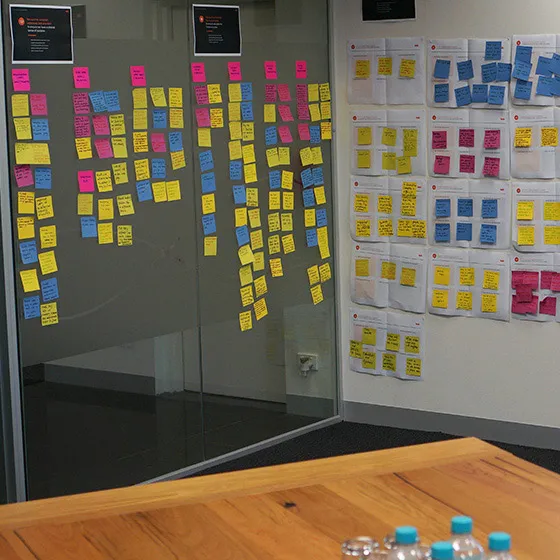
- Authors who can compose pages within a shared design system.
- Course information and authored content brought together.
- Reusable components, documentation and a modern development workflow.
- A team that stays involved as the site evolves.