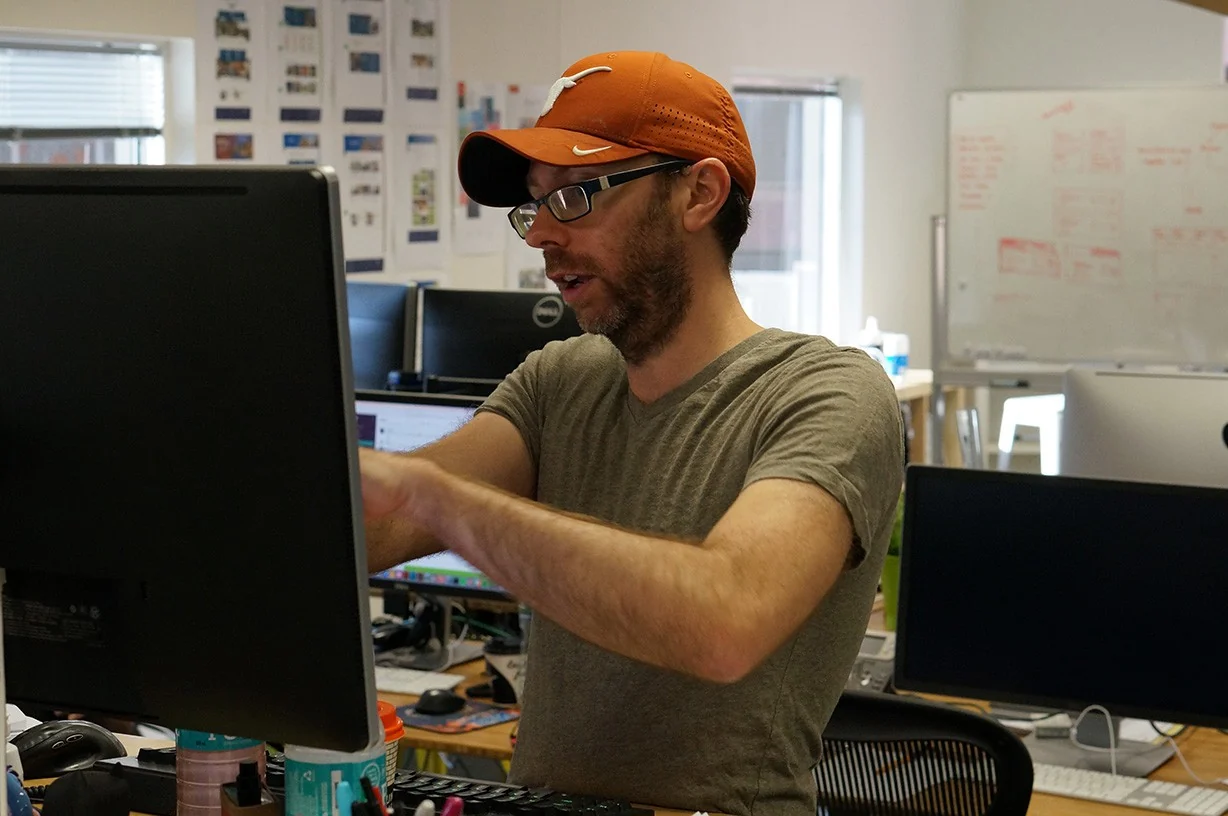
Discovery and user experience
Workshops, interviews, analytics and content audits that set the structure before anything is designed. Information architecture, user journeys and wireframes, tested with the people who will use the site.
Seen on

Dedicated Squiz and Funnelback specialists since 2010, which makes us the longest-running independent Squiz specialist in Australia, and an official Squiz partner today. We build on Squiz Matrix and Squiz DXP for state government, cultural institutions and universities, and we support what we build.












Discovery, design and a build on Squiz Matrix or Squiz DXP, or a planned migration with nothing lost on the way.
Start hereSee it in Study VictoriaNew components, search, accessibility, performance and the sections that no longer fit, delivered sprint by sprint.
Start hereSee it in State Electricity CommissionPre-purchased hours at a content rate and a specialist rate, tracked in LadooHQ and answered by senior developers.
Start hereSee it in National Museum of AustraliaEvery item below is something we have shipped for a client and continue to maintain.
Workshops, interviews, analytics and content audits that set the structure before anything is designed. Information architecture, user journeys and wireframes, tested with the people who will use the site.
Seen on
Design systems built to your brand or to a supplied design, from the home page to the component kit, so authors get pages that look designed without a designer in the room.
Seen on
Asset structures, design parse files, custom authoring interfaces, triggers, workflow and roles. We have built on Matrix since the platform was young and still maintain large Matrix estates.
Seen on
Component-led builds on Squiz DXP, with templates and publishing patterns that hold up for a large author community.
Seen on
Funnelback collections, result templates and tuning, plus Elasticsearch where it fits. Course search, school directories and site search across multilingual content.
Seen on
Scripted content migration from other platforms, and staged moves from Matrix to DXP that ship a batch of sites at a time so nothing goes dark.
Seen on
Single sign-on, APIs, live data feeds and forms. Dam storage levels, rainfall readings and finance comparison tools have all run through Squiz sites we built.
Seen on
Modular components authors can assemble without code, living style guides, and training for authors and administrators.
Seen on
WCAG 2.2 AA in design, build, content and QA. Governance for roles, workflow and triggers across distributed publishing teams.
Seen on
Pre-purchased hours at a content rate and a specialist rate, deducted in fifteen-minute increments and tracked in LadooHQ. Valid for two years from invoice.
Seen on
A claim is only useful if you can go and look at it. Each row links to the project.
| Capability | Running at |
|---|---|
| Custom authoring layer on Squiz Matrix with inline editing | Deakin University |
| Discovery, analytics-led information architecture and wireframes for a site shaped by the weather | WaterNSW |
| Four weeks of digital research and user interviews before the design of a grants site | Sport and Recreation Victoria |
| A visual design framework built around the collection, still in use eight years on | National Museum of Australia |
| A loud campaign brand built mobile-first for 18 to 25 year olds | Transport Accident Commission |
| Component-led Squiz DXP rebuild with Funnelback, forms and migration | Deakin University |
| Multilingual Squiz DXP site in five languages with Funnelback search | Study Victoria |
| Sections rebuilt on Squiz DXP components, one at a time, without a big-bang cutover | State Electricity Commission |
| Scripted content migration into a modular Squiz DXP build | National Museum of Australia |
| Live dam storage and rainfall data on public pages | WaterNSW |
| Section rebuild on modular DXP components with an interactive map preserved | State Electricity Commission |
| Templates and galleries for an annual entry and judging cycle |  Premier’s Design Awards Premier’s Design Awards |
| Course search across more than 200 courses | Deakin Course Search |
| New site stood up from inception, then supported through support packs | State Electricity Commission |
It depends on what your authors and integrations need, not on a deadline. We review your Matrix build, list what maps to DXP components and what would need rebuilding, and give you a staged plan with a cost for each batch. Some clients move everything. Some move the public site and keep the intranet where it is for now.
Yes, and we often do. The first weeks are an environment review, an asset and trigger inventory, an integration map and an accessibility check. From there you get a prioritised backlog and a support pack sized to it.
You pre-purchase hours. Content work such as publishing and media updates is billed at the content rate. Development, integration and system work is billed at the specialist rate. Requests are logged in LadooHQ, where you can see what is open and how many hours remain. Credit is deducted in fifteen-minute increments and is valid for two years.
Both, in the same team. Discovery, information architecture, wireframes, visual design, development, content migration and support are all delivered by Ladoo. If you already have a design agency, we will build from their files.
Nathan leads the account. Liam or another senior developer leads the technical work and stays on it. Steve and Leigh lead experience and visual design. You meet the people doing the work, and they do not change part-way through.
Support packs are pre-purchased hours, and at Ladoo we do things a little differently: one pack, two rates. Routine publishing is billed at the content rate, so you are not paying specialist money for a text change, and the same pack covers development when you need it. Content services cover web updates and general publishing. Specialist services cover technical and implementation work: responsive enhancements, custom JavaScript and integrations, triggers and workflow, design implementation, technical documentation, system health checks and training.
Requests are logged and tracked in LadooHQ, our support portal, where you can see open tasks and remaining hours. Credit is deducted in fifteen-minute increments and stays valid for two years from invoice. Packs come in four sizes, and larger packs carry a discount.
How a request runs: you log it in LadooHQ or email the support desk. We confirm which rate applies and, for anything beyond a quick fix, give you an estimate and a timeframe before starting. A pack is one balance of credit, not a fixed split between content and specialist hours, so each request draws on it at its own rate. The desk runs 8:30am to 5:30pm Melbourne time on business days; after-hours help is available by arrangement at a higher rate. When the balance is spent you can top up with another pack or pay as you go.
Each pack is one balance. It buys up to the specialist hours shown, or up to the content hours, or a mix of the two. Larger packs carry a discount.
A migration you are weighing up, a site someone else built, a search that is not finding things. Send it through and Nathan will reply.